The Casa di San Giorgio was overseen by an extended bureaucracy headed by the Ufficio di San Giorgio. This office consisted of eight executive officers (named protectores) selected by the major shareholders of San Giorgio. The protectores had to be citizens of Genoa and had to hold at least 1000 lire of the communal debt to be eligible to serve in the office. The term of service was generally one year, but was sometimes shorter or longer depending on political conditions. The following individuals served as protectors for the 1417–1419 term.
The Casa di San Giorgio was overseen by an extended bureaucracy headed by the Ufficio di San Giorgio. This office consisted of eight executive officers (named protectores) selected by the major shareholders of San Giorgio. The protectores had to be citizens of Genoa and had to hold at least 1000 lire of the communal debt to be eligible to serve in the office. The term of service was generally one year, but was sometimes shorter or longer depending on political conditions. The following individuals served as protectors for the 1419–1421 term.
The Casa di San Giorgio was overseen by an extended bureaucracy headed by the Ufficio di San Giorgio. This office consisted of eight executive officers (named protectores) selected by the major shareholders of San Giorgio. The protectores had to be citizens of Genoa and had to hold at least 1000 lire of the communal debt to be eligible to serve in the office. The term of service was generally two years, but was sometimes shorter or longer depending on political conditions. The following protectores served during the period from 1421-08-01 to 1422-07-31. In this office, Domenico de Fossatello was replaced by Luciano Spinola on 7 January 1422, Ambrogio Grillo was replaced by Andrea Maruffo on 7 January 1422, and Andrea was subsequently replaced by his son Andalò Maruffo on 13 March 1422.
The Casa di San Giorgio was overseen by an extended bureaucracy headed by the Ufficio di San Giorgio. This office consisted of eight executive officers (named protectores) selected by the major shareholders of San Giorgio. The protectores had to be citizens of Genoa and had to hold at least 1000 lire of the communal debt to be eligible to serve in the office. The term of service was generally two years, but was sometimes shorter or longer depending on political conditions. The following protectores served during the period from 1422 to 1424.
The Casa di San Giorgio was overseen by an extended bureaucracy headed by the Ufficio di San Giorgio. This office consisted of eight executive officers (named protectores) selected by the major shareholders of San Giorgio. The protectores had to be citizens of Genoa and had to hold at least 1000 lire of the communal debt to be eligible to serve in the office. The term of service was generally two years, but was sometimes shorter or longer depending on political conditions. The following protectores served during the period from 1425 to 1426
The Casa di San Giorgio was overseen by an extended bureaucracy headed by the Ufficio di San Giorgio. This office consisted of eight executive officers (named protectores) selected by the major shareholders of San Giorgio. The protectores had to be citizens of Genoa and had to hold at least 1000 lire of the communal debt to be eligible to serve in the office. The term of service was generally two years, but was sometimes shorter or longer depending on political conditions. The following protectores served during the period from 1427 to 1428.
The Casa di San Giorgio was overseen by an extended bureaucracy headed by the Ufficio di San Giorgio. This office consisted of eight executive officers (named protectores) selected by the major shareholders of San Giorgio. The protectores had to be citizens of Genoa and had to hold at least 1000 lire of the communal debt to be eligible to serve in the office. The term of service was generally two years, but was sometimes shorter or longer depending on political conditions. The following protectores served this office, with Ansaldo Doria replacing Giovanni Doria and Giovanni de Franchi replacing Cristoforo de Franchi.
The Casa di San Giorgio was overseen by an extended bureaucracy headed by the Ufficio di San Giorgio. This office consisted of eight executive officers (named protectores) selected by the major shareholders of San Giorgio. The protectores had to be citizens of Genoa and had to hold at least 1000 lire of the communal debt to be eligible to serve in the office. The term of service was generally two years, but was sometimes shorter or longer depending on political conditions.
The following protectores served from 1432-06-11 to 1431-12-31.
In this office, Percivale Centurione was replaced by Luca Grimaldi and Raffaele Spinola was replaced by his brother Giovanni Spinola on 11 June 1432.
The Casa di San Giorgio was overseen by an extended bureaucracy headed by the Ufficio di San Giorgio. This office consisted of eight executive officers (named protectores) selected by the major shareholders of San Giorgio. The protectores had to be citizens of Genoa and had to hold at least 1000 lire of the communal debt to be eligible to serve in the office. The term of service was generally two years, but was sometimes shorter or longer depending on political conditions. The following protectores served during the period from 1433 to 1434.
The Casa di San Giorgio was overseen by an extended bureaucracy headed by the Ufficio di San Giorgio. This office consisted of eight executive officers (named protectores) selected by the major shareholders of San Giorgio. The protectores had to be citizens of Genoa and had to hold at least 1000 lire of the communal debt to be eligible to serve in the office. The term of service was generally two years, but was sometimes shorter or longer depending on political conditions. The following protectores served during the period from 1435 to 1436.
The Casa di San Giorgio was overseen by an extended bureaucracy headed by the Ufficio di San Giorgio. This office consisted of eight executive officers (named protectores) selected by the major shareholders of San Giorgio. The protectores had to be citizens of Genoa and had to hold at least 1000 lire of the communal debt to be eligible to serve in the office. The term of service was generally two years, but was sometimes shorter or longer depending on political conditions. The following protectores served during the period from 1437 to 1438.
The Casa di San Giorgio was overseen by an extended bureaucracy headed by the Ufficio di San Giorgio. This office consisted of eight executive officers (named protectores) selected by the major shareholders of San Giorgio. The protectores had to be citizens of Genoa and had to hold at least 1000 lire of the communal debt to be eligible to serve in the office. The term of service was generally two years, but was sometimes shorter or longer depending on political conditions. The following protectores served during the period from 1439 to 1440.
The Casa di San Giorgio was overseen by an extended bureaucracy headed by the Ufficio di San Giorgio. This office consisted of eight executive officers (named protectores) selected by the major shareholders of San Giorgio. The protectores had to be citizens of Genoa and had to hold at least 1000 lire of the communal debt to be eligible to serve in the office. The term of service was generally two years, but was sometimes shorter or longer depending on political conditions. The following protectores served during the period from 1441 to 1442.
The Casa di San Giorgio was overseen by an extended bureaucracy headed by the Ufficio di San Giorgio. This office consisted of eight executive officers (named protectores) selected by the major shareholders of San Giorgio. The protectores had to be citizens of Genoa and had to hold at least 1000 lire of the communal debt to be eligible to serve in the office. The term of service was generally two years, but was sometimes shorter or longer depending on political conditions. The following protectores served during the period from 1443 to 1444.
Puerto de Santa María was Spanish commune located in Andalusia and under the administration of the Crown of Castile during the late medieval and early modern periods.
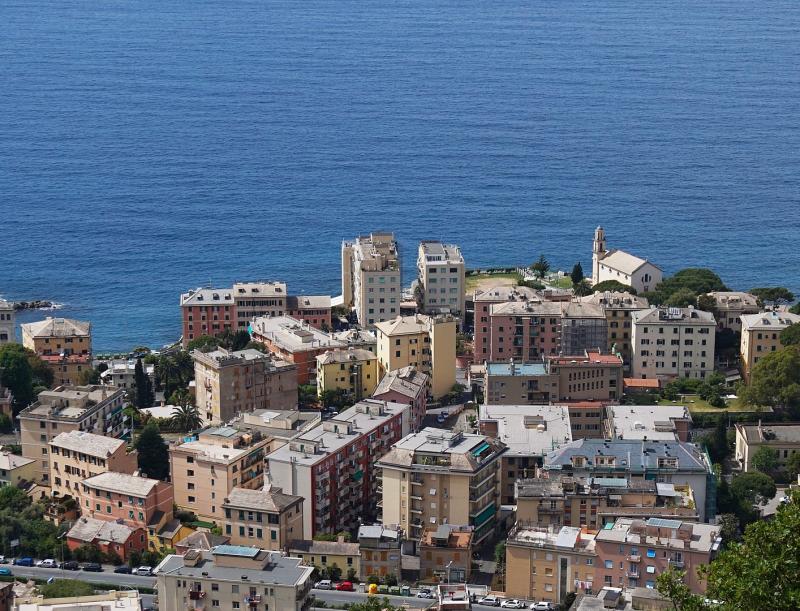
Quinto al Mare (known just as Quinto in the late medieval and early modern period) was a commune approximately 8 km east of the city of Genoa. It had been under Genoese rule since the twelfth century.